English 10

I found some old newspapers while I was tidying up the attic recently.
“while” = two actions happening at the same time

I almost fell asleep during the meeting this afternoon.
“during” + noun (“the meeting”)

The US belonged to the UK until 1776, when it gained independence.
“until” = up to a point in time

I was looking for my phone. Meanwhile, my wife had found it and was looking for me.
“meanwhile” = at the same time, but different action

We called the police as soon as we discovered the house had been robbed.
“as soon as” = immediately after something

We spent ages looking for the shop and by the time we found it, it was closed.
“by the time” = something already happened before another moment

There were many important discoveries during the 1800s.
“during” + period of time

Luke and I met while we were working together in a café.
“while” = same time actions

2.

Although it’s very popular nowadays, during the 1950s pasta was an unusual meal in the UK. Not many British people had been to Italy, and very few people knew how pasta was made. So, for April Fool’s Day in 1957, the BBC news programme Panorama decided to make a story about spaghetti growing on trees.

During the programme, viewers were told that the harvest that year was particularly good because of the weather. And while the presenter explained how spaghetti was grown, there was a film of workers in the background cutting the spaghetti from the trees.

As soon as the programme had been broadcast, the BBC started receiving phone calls from people who wanted to grow their own spaghetti. Meanwhile, the BBC continued the joke by instructing anyone who wanted to grow a spaghetti tree to “place a piece of spaghetti in a tin of tomato sauce.”

3.

I woke up three times during the night.

Sorry I didn’t speak to you earlier, but I phoned you as soon as I could.

We were very late and the party had finished by the time we got there.

We walked all day until it got dark, and then we went home.

We just couldn’t find the plane tickets. We looked everywhere. Meanwhile, the taxi to the airport was waiting for us outside.

The Worst Day of My Life

The Worst Day of My Life

One of the worst days of my life was the day when I broke my arm. At first, it seemed like a normal day, and I didn’t think anything bad would happen. I was playing and having a good time, but suddenly an accident happened.

At one moment I fell and felt a very strong pain in my arm. At first I didn’t understand what had happened, but the pain became stronger and stronger. When they took me to the doctor, it turned out that my arm was broken. At that moment I felt very scared and sad.

Then the doctors put a cast on my arm, and for a long time I couldn’t move it normally. Those days were very difficult because even simple things were hard to do. But this experience taught me to be more careful and to appreciate my health.

Although that day was very painful and sad, everything got better with time, and now I remember it as an experience that made me stronger.

English 10

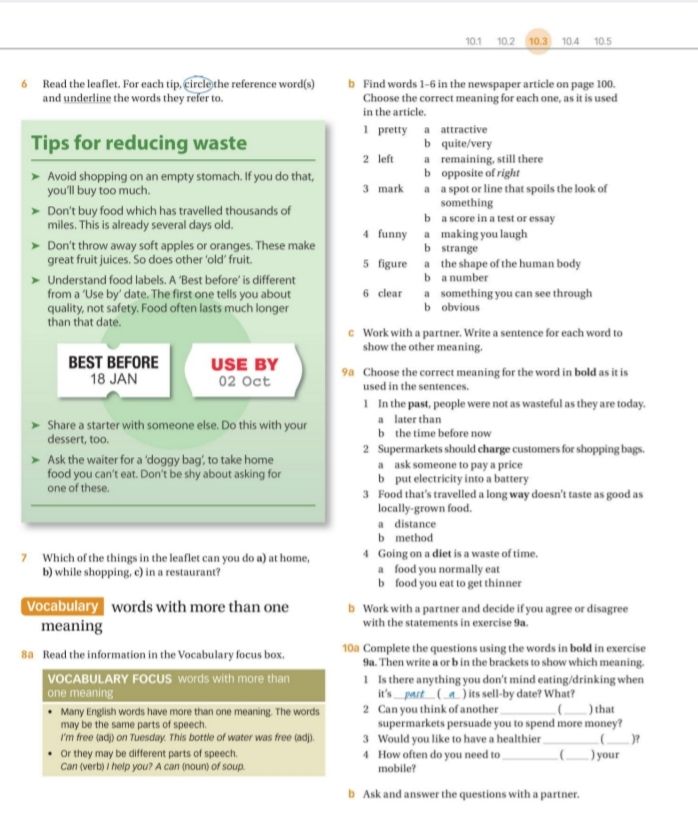
The psychology of shopping studies why and how people make purchasing decisions. It explains the factors that influence consumers, such as emotions, advertising, environment, social influence, and personal needs.

First of all, emotions play a major role. When a person feels happy, sad, or stressed, they may go shopping to change their mood. This is called “emotional shopping.” Many stores use music, pleasant scents, and lighting to create a comfortable atmosphere and encourage customers to stay longer and buy more.

Another important factor is advertising. Advertisements often influence our subconscious mind by suggesting that a product will improve our life, increase our confidence, or make us more successful. On social media, bloggers and influencers also strongly affect people’s choices.

Social influence is another key element. People often buy things that their friends buy or that are currently fashionable. This is connected to the desire to feel accepted in society.

Finally, discounts and special offers are very powerful. Signs like “50% off” or “limited time offer” can push people to make quick decisions, even if they do not really need the product.

English 10

Among adult users of Facebook, the average number of friends is 338.

Rob Jones is trying to meet all the friends on his Facebook page in real life. He is travelling to many countries and meeting people face-to-face. His aim is to raise money for a children’s charity.

So far he has already met 123 friends from ten countries. When he meets them, he takes a photo and asks them to give some money to the charity. He has already raised more than £3,000.

Rob hopes to meet all 700 friends within three years. He is travelling thousands of miles to many countries, even to the other side of the world.

Many people say that Facebook friends are not real friends. But Rob does not agree. He met his Polish girlfriend online and they have been together for three years.

Rob says the internet is a powerful tool. He is meeting new people and learning a lot about himself. Now he has good friends in many different countries.

If you want, I can also make

English 10

1)

Do you know any offices that look like these? Where?
Yes, I know offices like these. Some IT companies and call centers in Yerevan use open-plan offices. Many modern companies use this style because it saves space and helps people communicate.

Which type of office would you work best in?
I would work best in a quiet private office because I can concentrate better and do my work faster without noise.

One advantage and one disadvantage of each type of office:

2)

I’m a sales / software developer / journalist.
sales (wrong)
software developer / journalist

2️⃣ I’m studying engineering / scientist / IT.
scientist
engineering / IT

3️⃣ I work as a nurse / politics / a PA.
politics
nurse / a PA

4️⃣ I work for a construction / builder company.
builder
construction

5️⃣ I work in sales / administrator / IT / publishing.
administrator
sales / IT / publishing

6️⃣ I’d like to become accountant / engineering / a nurse.
engineering
accountant / a nurse

English 10

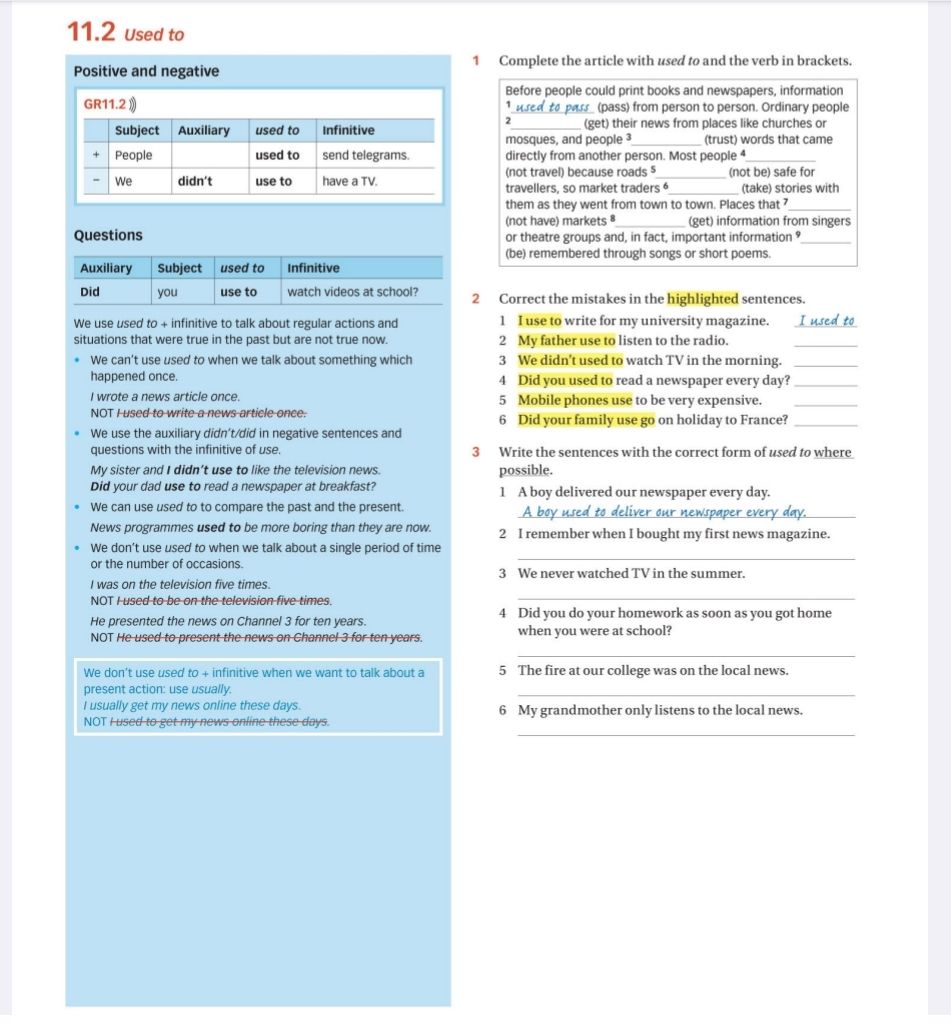
1)Before people could print books and newspapers, information used to pass from person to person. Ordinary people used to get their news from places like churches or mosques, and people used to trust words that came directly from another person. Most people didn’t use to travel because roads weren’t safe for travellers, so market traders used to take stories with them as they went from town to town. Places that didn’t have markets used to get information from singers or theatre groups and, in fact, important information used to be remembered through songs or short poems.

2)

I used to write for my university magazine.

My father used to listen to the radio.

We didn’t use to watch TV in the morning.

Did you use to read a newspaper every day?

Mobile phones used to be very expensive.

Did your family use to go on holiday to France?

3)

Did you use to do your homework as soon as you got home when you were at school?

The fire at our college was in the local news.

My grandmother only listens to the local news.

English 10

9.

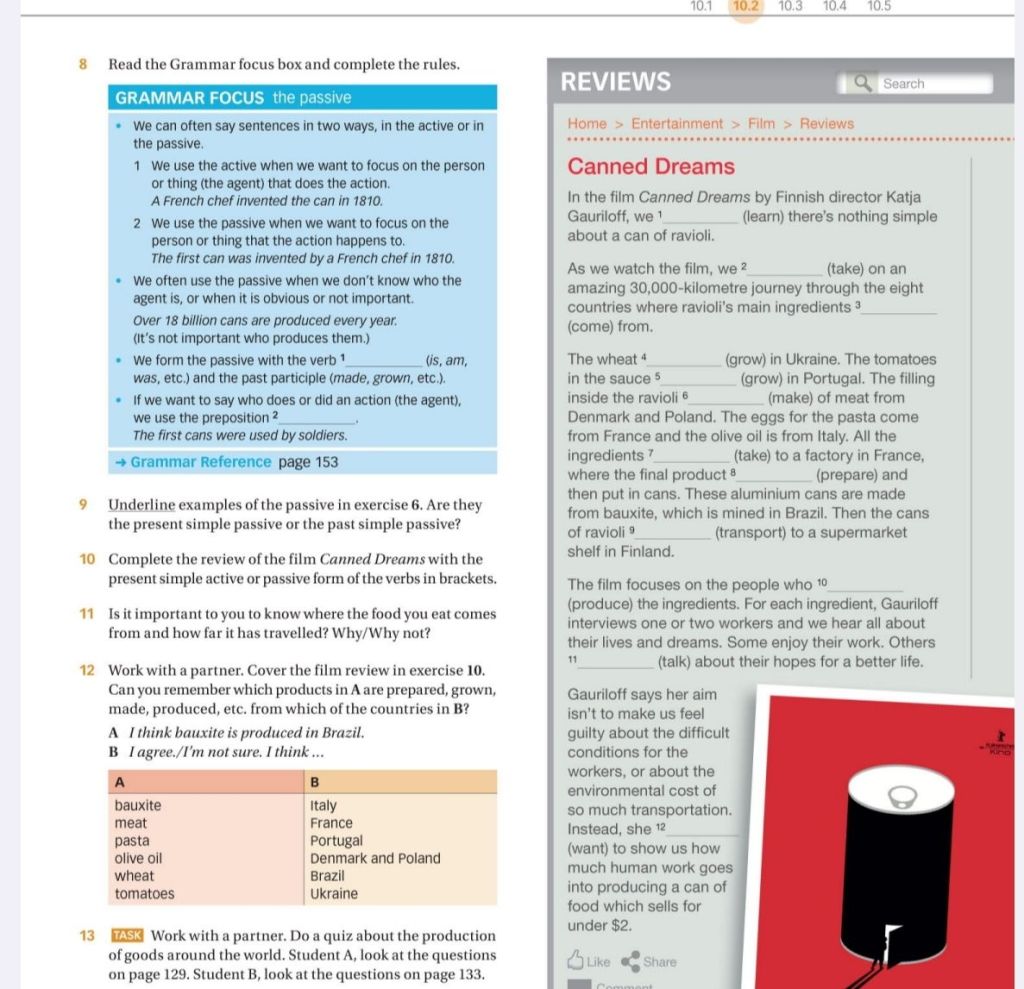
Present simple passiveam / is / are + past participle
Օրինակ՝ Cans are produced every year.

Past simple passivewas / were + past participle
Օրինակ՝ The first can was invented in 1810.

11.

Yes, it is important for me to know where my food comes from.
First, it helps me understand if the food is healthy and safe.
Second, I can see how far it has travelled and how it affects the environment.
Finally, I think it is good to support countries or farmers who produce food in a responsible way.

12.

Completed Text

In the film Canned Dreams by Finnish director Katja Gauriloff, we learn there’s nothing simple about a can of ravioli.

As we watch the film, we are taken on an amazing 30,000-kilometre journey through the eight countries where ravioli’s main ingredients come from.

The wheat in the sauce is grown in Ukraine.
The tomatoes are grown in Portugal.
The filling inside the ravioli is made of meat from Denmark and Poland.
The eggs for the pasta come from France and the olive oil is from Italy.
All the ingredients are taken to a factory in France, prepared, and where the final product is then put in cans.

These aluminium cans are made from bauxite, which is mined in Brazil.
Then the cans of ravioli are transported to a supermarket shelf in Finland.

The film focuses on the people who produce the ingredients.
For each ingredient, Gauriloff interviews one or two workers and we hear all about their lives and dreams. Some enjoy their work. Others talk about their hopes for a better life.

English 10

What kind of place do you prefer to stay in when you travel? Why?

Sample Answers (choose one or use as a model):

a) Hostel

“I prefer to stay in a hostel because it’s cheap and I can meet other travelers. Hostels usually have a friendly atmosphere.”

b) International hotel

“I prefer international hotels because they are comfortable, clean and have good service. I feel more relaxed when everything is organized.”

c) Bed and breakfast

“I like staying in a bed and breakfast because it feels more personal and homely. You also get a nice breakfast in the morning.”

d) Self-catering apartment

“I prefer a self-catering apartment because I like cooking my own food and having more privacy. It also feels more like home.”

e) Local hotel

“I prefer local hotels because they are cheaper than big hotels and I can experience the local culture more closely.”

2.

Cost
Because I want something affordable so I can spend more money on activities and sightseeing.

Location
Because I want to stay close to the city center or the places I want to visit. It saves time and transport costs.

Internet access / Wi-Fi
Because I need Wi-Fi to check maps, plan my day, and stay in touch with family or friends

English 10

1.freezing temperatures → mentioned as -20°C, -35°C, -45°C, -43°C

Siberia → “Eastern Siberia”

warm clothing / layers of clothing → “I’m wearing fourteen items of clothing.”

remote city → “Yakutsk is remote… time zones from Moscow”

ice / snow / freezing → “your nose freezes”, “your legs freeze”, skin freezing

minus 50 degrees → “Temperatures often drop to -50°C”

2.

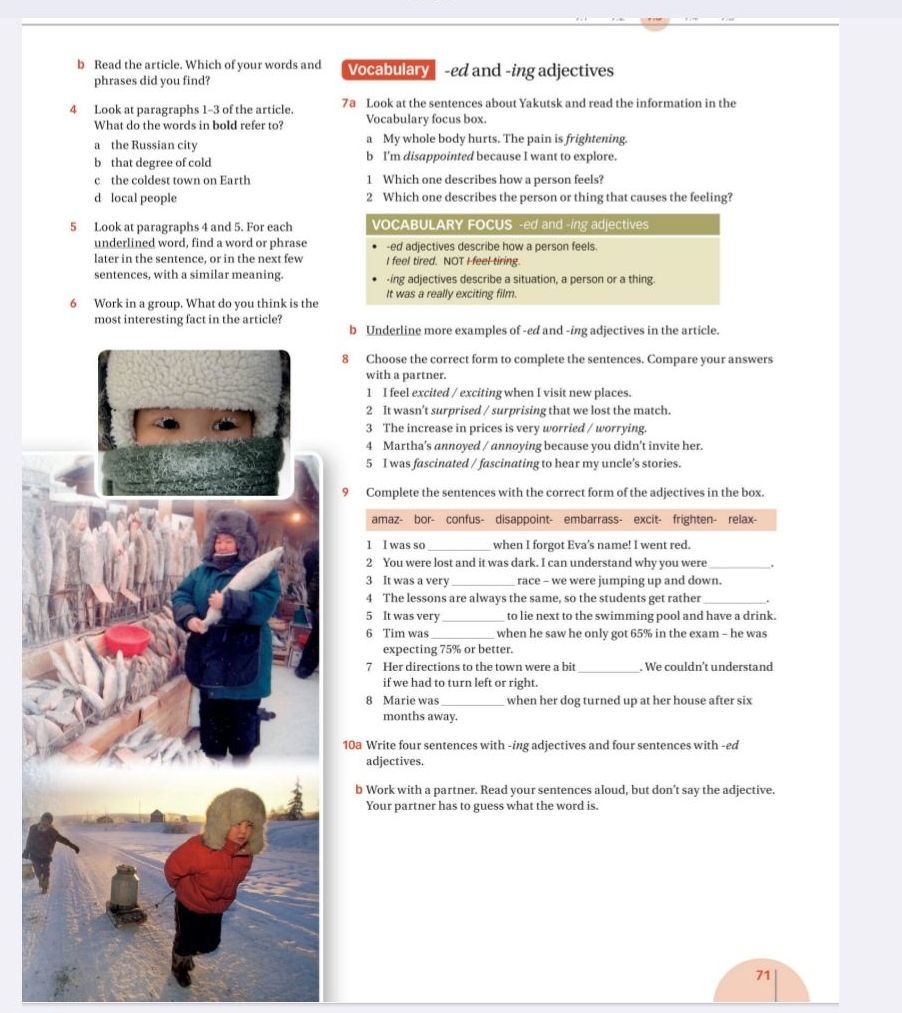
Sentence 1

“My whole body hurts. The pain is frightening.”

  • How a person feels: My whole body hurts.
  • The person/thing that causes the feeling: The pain is frightening.
    (The pain is the cause of the feeling.)

Sentence 2

“I’m disappointed because I want to explore.”

  • How a person feels: I’m disappointed.
  • The person/thing that causes the feeling: because I want to explore.
    (Not being able to explore is the cause of the feeling.)

3.

From the Yakutsk text, examples include:

–ed adjectives (describe how a person feels):

  • surprised
  • disappointed
  • tired (implied in “I start to feel terrible”)
  • embarrassed

–ing adjectives (describe the thing that causes the feeling):

  • frightening (the pain is frightening)
  • embarrassing (glasses sticking to your skin is embarrassing)
  • interesting (implied meaning, even if not in your text)

4.

Sentences with –ing adjectives (4)

  1. The film was so exciting that I couldn’t stop watching.
  2. That noise outside is really annoying when I’m trying to study.
  3. His story about the cold weather was frightening.
  4. The homework was confusing, so I had to ask for help.

5.

Sentences with –ed adjectives (4)

  1. I was surprised to see snow in April.
  2. She felt worried when her phone stopped working.
  3. We were embarrassed when we got the answer wrong.
  4. He looked tired after walking for three hours.