Մարդկության Աճ-Ավելացում

1.Խմելու ջուր

Ինչու 1-ին տեղում․
Մարդկության աճը մեծացնում է մաքուր ջրի սպառումը:

2.Սննդի (անդի) պակաս

Ինչու․
Աշխարհում մարդկանց թիվը աճում է, բայց մշակվող հողերը չեն ավելանում։ Պակասում է հողը, ջուրը, և սննդի արտադրությունը հասցնում պահանջարկին։

3. Օդի աղտոտում

Ինչու․
Շատ արդյունաբերություն և մեքենաներ՝ CO₂, փոշի, թունավոր գազեր։ Վտանգում է առողջությունը, առաջացնում հիվանդություններ։

4.. Տարածության պակաս / Գերբնակվածություն

Ինչու․
Մարդիկ կուտակվում են քաղաքներում, առաջանում է բնակարանի, պակաս և մարդիկ կառուցում են

5..Էներգիայի և բնական ռեսուրսների սպառում


Ավել մարդիկ -ավել արտադրություն — ավել էներգիա ու հումք։

6. Բնական աղետների ուժեղացում


Շատ բնակչություն նշանակում է շատ արդյունաբերություն, մեքենաներ, էլեկտրաէներգիա։

7. Օվկիանոսների աղտոտում

Ինչու․
Աճող բնակչությունը ստեղծում է միլիոնավոր տոննա պլաստիկ ու քիմիկատներ, որոնք հասնում են օվկիանոսներ։

8. Հողերի կորուստ և անապատացում

Ինչու․
Գերբնակվածության պատճառով հողերը օգտագործվում են քաղաքների, ճանապարհների, գործարանների համար։

9. Կենսաբազմազանության կորուստ

Ինչու․
Անտառահատում, որս, մսի պակաս

11. Ընդհանուր տաքացում   Կլիմայի փոփոխություն

(Դա իրականում կապ ունի օդի աղտոտման ու ռեսուրսների սպառման հետ, բայց ուզում էի առանձնացնել)
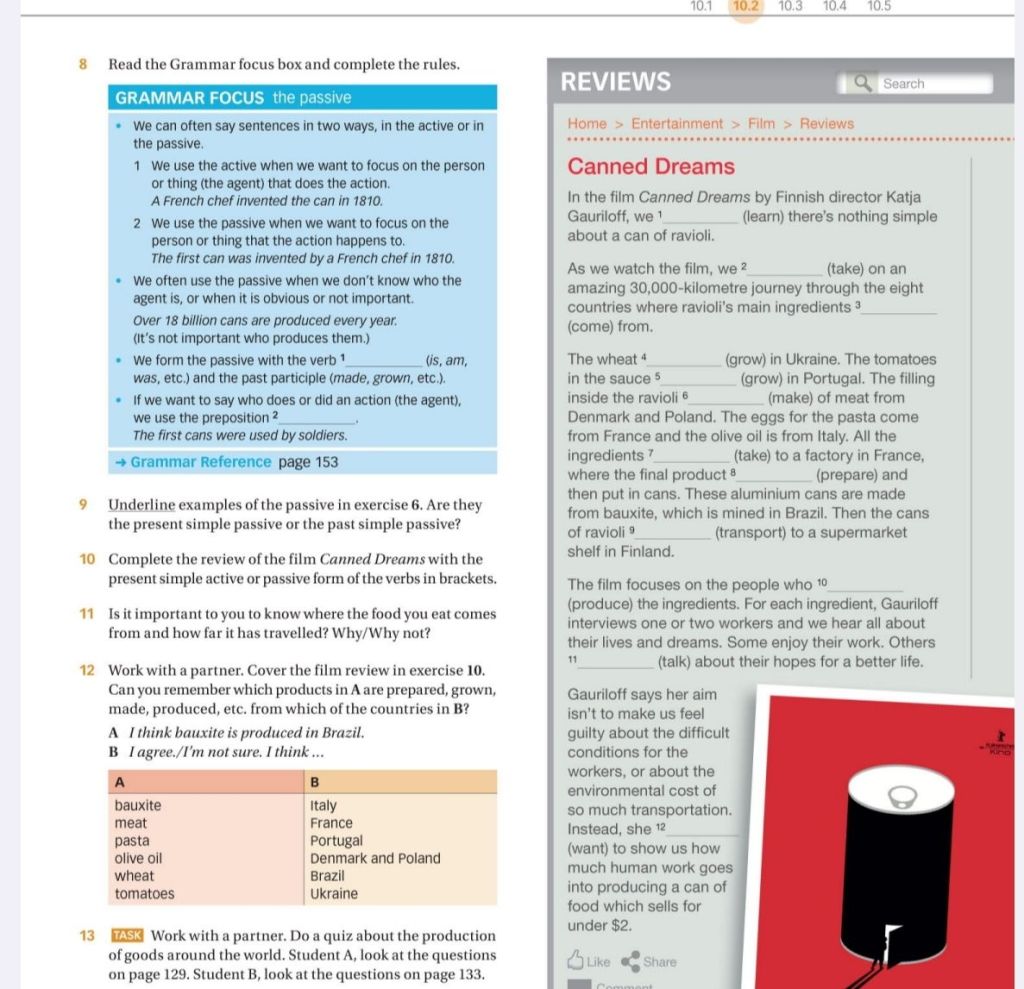
English 10

9.

Present simple passiveam / is / are + past participle
Օրինակ՝ Cans are produced every year.

Past simple passivewas / were + past participle
Օրինակ՝ The first can was invented in 1810.

11.

Yes, it is important for me to know where my food comes from.
First, it helps me understand if the food is healthy and safe.
Second, I can see how far it has travelled and how it affects the environment.
Finally, I think it is good to support countries or farmers who produce food in a responsible way.

12.

Completed Text

In the film Canned Dreams by Finnish director Katja Gauriloff, we learn there’s nothing simple about a can of ravioli.

As we watch the film, we are taken on an amazing 30,000-kilometre journey through the eight countries where ravioli’s main ingredients come from.

The wheat in the sauce is grown in Ukraine.
The tomatoes are grown in Portugal.
The filling inside the ravioli is made of meat from Denmark and Poland.
The eggs for the pasta come from France and the olive oil is from Italy.
All the ingredients are taken to a factory in France, prepared, and where the final product is then put in cans.

These aluminium cans are made from bauxite, which is mined in Brazil.
Then the cans of ravioli are transported to a supermarket shelf in Finland.

The film focuses on the people who produce the ingredients.
For each ingredient, Gauriloff interviews one or two workers and we hear all about their lives and dreams. Some enjoy their work. Others talk about their hopes for a better life.